by Anna Smith
Mastering OKRs for High-Volume Hiring: A Strategic Blueprint
High-volume hiring is the strategic process of filling open positions quickly and efficiently without compromising on quality. OKRs (Objectives and Key Results) provide a powerful framework to focus your entire talent acquisition team on these critical hiring goals. By bridging the gap between ambitious hiring targets and the HR technology you use daily, you can transform your recruitment from a reactive process into a scalable, data-driven engine for growth.
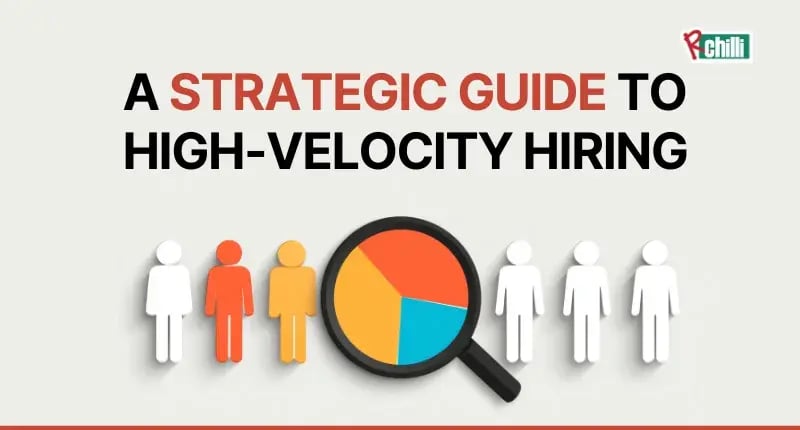
The High-Stakes Race for Talent: Why Speed and Strategy Matter
In today's competitive talent landscape, speed isn't just an advantage—it's a necessity. Every day a crucial role remains open, your company loses potential revenue, innovation, and market momentum. But hiring fast means nothing if you hire wrong. This is the fundamental challenge of high-volume hiring: the need for speed must be perfectly balanced with the demand for quality.
So, how do you align your entire talent acquisition machine—from recruiters to hiring managers—toward this dual objective? The answer lies in a powerful goal-setting framework that has fueled the growth of tech giants like Google and Intel: OKRs for hiring.
This post will guide you through bridging the gap between your ambitious hiring goals and the HR technology that can make them a reality. You'll learn how to craft effective OKRs that drive action, leverage your tech stack for maximum impact, and build a hiring engine that doesn't just fill seats but propels your business forward.
Demystifying OKRs: The Engine for Strategic Hiring
Before we dive into application, let's clarify what OKRs are. OKR stands for Objectives and Key Results. It’s a collaborative goal-setting framework used by teams and individuals to set ambitious, measurable goals.
- Objective (The "What"): A qualitative, inspirational goal. It answers the question, "Where do we want to go?" Example: "Become the employer of choice for top-tier software engineers."
- Key Results (The "How"): A set of 2-5 quantitative metrics that measure progress toward the Objective. They answer, "How will we know we're getting there?" Example: "Increase our offer acceptance rate from 65% to 80%" or "Reduce time-to-hire for engineering roles from 45 to 30 days."
When applied to recruitment, OKRs for hiring create a clear line of sight from the company's strategic goals directly to the talent acquisition team's daily activities.
Crafting Powerful OKRs for High-Volume Hiring
Creating effective OKRs requires moving beyond vague goals like "hire faster." Your OKRs should be specific, measurable, and aligned with business outcomes. Here’s a breakdown of how to structure them.
Setting the Stage: Your Hiring Objective
Your Objective should be ambitious and focused. It sets the tone for the entire quarter or hiring cycle.
- Example Objective: "Build a world-class, diverse sales team to dominate the EMEA market in Q3."
- Non-Example: "Hire 10 salespeople." (This is a task, not an inspiring objective).
Measuring Success: Key Results for Hiring
Your Key Results are the concrete, data-driven signals of your progress. For high-volume hiring, focus on a mix of speed, quality, and efficiency metrics.
Sample Key Results:
- Speed & Efficiency:
- Reduce average Time-to-Fill for all open roles from 60 days to 45 days.
- Decrease Time-to-Interview (from application to first interview) to under 72 hours.
- Quality of Hire:
- Achieve a 90% positive feedback score from hiring managers on candidate quality.
- Ensure 95% of new hires pass their probationary period.
- Candidate Experience:
- Maintain a candidate Net Promoter Score (NPS) of +50 or higher throughout the hiring surge.
- Diversity & Inclusion:
- Increase the percentage of female candidates in the tech hiring pipeline from 20% to 35%.
The Digital Backbone: Integrating HR Tech with Your Hiring OKRs
Your OKRs set the destination, but your HR technology is the vehicle that gets you there. A disconnected tech stack is the biggest roadblock to high-volume hiring. Your tools must work in concert to provide the data and automation needed to achieve your Key Results.
Modern OKR software can be the central nervous system for this effort, ensuring every team member knows the goal and how their work contributes. When integrated with your Applicant Tracking System (ATS), it creates a powerful feedback loop.
How HR Tech Powers Key Results:
- To Reduce Time-to-Fill (KR): Use an ATS with automated sourcing and screening to quickly identify top candidates from a large pool.
- To Improve Candidate NPS (KR): Implement a scheduling tool that eliminates back-and-forth emails and provides a seamless interview experience.
- To Increase Pipeline Diversity (KR): Leverage a platform like Gem or SeekOut to proactively source diverse talent and track pipeline demographics.
Case Study: How a Unicorn Scaled its Engineering Team
Background: A rapidly growing FinTech unicorn needed to scale its engineering team by 50% within a single quarter to support a new product launch. Their existing process was slow, and they were losing top candidates to competitors.
The Challenge: Their previous goal was simply "Hire 30 Engineers." This led to a frantic, high-pressure environment that compromised on candidate fit and diversity.
The OKR Solution: They implemented a focused set of OKRs for hiring:
- Objective: "Assemble a brilliant and cohesive product engineering team to successfully launch 'Project Nexus' in Q4."
- Key Results:
- Fill 30 backend and frontend engineer roles by October 31.
- Source 40% of new hires from non-traditional backgrounds (boot camps, etc.) to widen the talent pool.
- Reduce the technical interview cycle from 4 rounds to 2 rounds without compromising quality.
- Achieve a 85% offer acceptance rate.
Integration with HR Tech: They used their ATS to create scorecards based on the new, streamlined interview process. They integrated their ATS with their OKR software so that every hiring manager and recruiter could see real-time progress against the KRs. A dedicated sourcing tool helped them proactively find candidates from diverse backgrounds, tracking this metric directly within the platform.
The Result: According to a McKinsey report on talent acquisition, companies that align hiring with strategic goals and leverage data are 3x more likely to report successful hiring outcomes. This company mirrored that success. They not only hit their target of 30 hires but did so with a 50% reduction in time-per-hire and a significant increase in the quality and diversity of their engineering team, directly enabling their successful product launch.
Best Practices for Implementing Your Hiring OKRs
- Cascade and Align: Ensure company-level OKRs cascade down to department-level (Talent Acquisition) and individual recruiter OKRs. Everyone should be rowing in the same direction.
- Keep it Simple: Limit your hiring OKRs to 1-2 key Objectives per quarter with 3-5 KRs total. Too many goals lead to a lack of focus.
- Make KRs Ambitious but Realistic: Key Results should be a stretch, but not demoralizing. Use historical data from your HR tech stack to set baselines.
- Review Weekly: Don't set and forget. Hold weekly check-ins with the TA team to review progress, discuss blockers, and adjust strategies using real-time data from your ATS and other tools.
Conclusion: From Reactive Hiring to a Strategic Powerhouse
OKRs for hiring are more than just a goal-setting exercise; they are a fundamental shift in how you view talent acquisition. By moving from a reactive "fill reqs" model to a strategic "achieve these business outcomes" model, you empower your team with clarity and purpose. When this focused intent is supercharged by a seamlessly integrated HR tech stack, you achieve true high-volume hiring. You stop just hiring fast, and start hiring smart—building teams that are not just quick to assemble, but built to win. The race for talent is won by those who are both swift and strategic.
Frequently Asked Questions (FAQs)
What are OKRs in the hiring process?
OKRs in hiring are a goal-setting framework that aligns your talent acquisition team's efforts with strategic business objectives. They ensure everyone is focused on measurable outcomes like reducing time-to-fill or improving quality of hire, not just filling open positions.
How do you set OKRs for a recruiting team?
Start with a qualitative, inspirational Objective. Then, define 3-5 quantitative Key Results that measure success. These KRs should focus on metrics like time-to-hire, candidate quality, offer acceptance rates, and diversity, all pulled from your HR tech stack.
What is the difference between KPIs and OKRs?
KPIs (Key Performance Indicators) are ongoing health metrics for a process (e.g., number of applicants per req). OKRs are ambitious, time-bound goals designed to drive change and significant improvement. Your OKRs for hiring will often use KPIs as a baseline for their Key Results.
How can OKRs improve hiring quality?
By making "Quality of Hire" a explicit Key Result—measured through hiring manager satisfaction, probation pass rates, or performance data—OKRs force the team to prioritize candidate fit and skills over simply filling a role quickly.
What are common high-volume hiring metrics?
Common metrics include Time-to-Fill, Time-to-Hire, Candidate NPS, Offer Acceptance Rate, and Source of Hire. These are the typical data points used to build effective Key Results in your hiring OKRs.
Why align HR tech with hiring goals?
An integrated HR tech stack provides the real-time data and automation needed to track and achieve your OKRs. Without it, you're managing goals in a vacuum, disconnected from the actual recruitment workflow and its measurable outcomes.


.webp)
Leave a Reply